Introduction
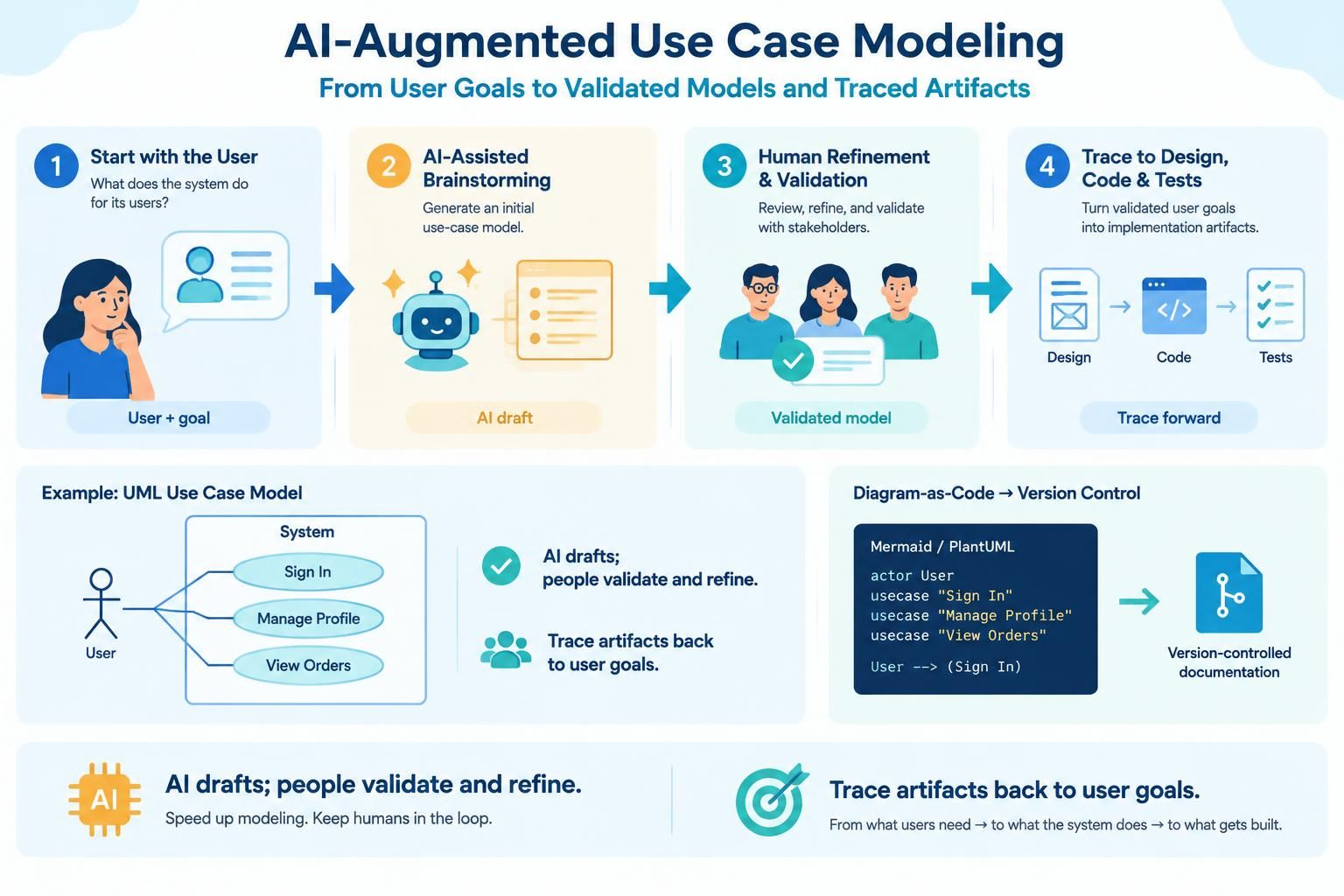
Use case modeling remains the most effective technique for capturing functional requirements from an outside-in, user-goal perspective. It answers the fundamental question: “What does the system do for its users?” without prematurely diving into implementation details. Visual Paradigm has evolved this discipline by embedding AI assistance directly into the modeling workflow, transforming what was once a time-consuming brainstorming exercise into a rapid, iterative, and standards-compliant process.
This guide explores how Visual Paradigm supports the use-case-driven approach, its AI-assisted features, and practical implementation strategies. It includes a Mermaid diagram example for version-controlled documentation, identifies who benefits most, and provides actionable tips for maximizing the tool’s potential.
Why Use Case Modeling with Visual Paradigm?
Use case modeling serves as the contract between stakeholders and development teams. It provides a natural boundary for the system, forcing teams to think in terms of value delivered rather than technical convenience . Visual Paradigm amplifies this by:
-
Accelerating Initial Discovery: AI suggests candidate actors and use cases based on a plain-language scope description, reducing days of brainstorming to minutes .
-
Ensuring UML Compliance: The tool enforces UML 2.5 standards, automatically suggesting proper «include» and «extend» relationships that many manual modelers overlook .
-
Bridging Requirements to Design: Use cases become the central thread tying together flow-of-events documentation, activity diagrams, sequence diagrams, and test cases within a single platform .
Who Benefits Most?
Standout AI-Assisted Features
1. AI Diagram Generation from Natural Language
Describe your system in plain English (e.g., “A library system where patrons borrow books, staff manage catalog, and fines are paid on late returns”). Visual Paradigm’s AI generates a complete use case diagram with actors, system boundary, and associations in seconds .
2. AI-Powered Use Case Refinement
After initial generation, the AI analyzes your diagram for relationship opportunities. It proposes «include» relationships for shared mandatory behavior (e.g., “Authenticate User” included by multiple use cases) and «extend» relationships for optional flows (e.g., “Apply Discount Coupon” extending “Book a Table”) . You review and approve each suggestion.
3. Intelligent Flow of Events Generation
Right-click any use case and open Use Case Details → Flow of Events. The AI can generate a numbered main success scenario and suggest alternative/exception flows based on the use case name and context. This bridges the gap between the diagram oval and a testable specification .
4. VPasCode Native AI for Diagram-as-Code
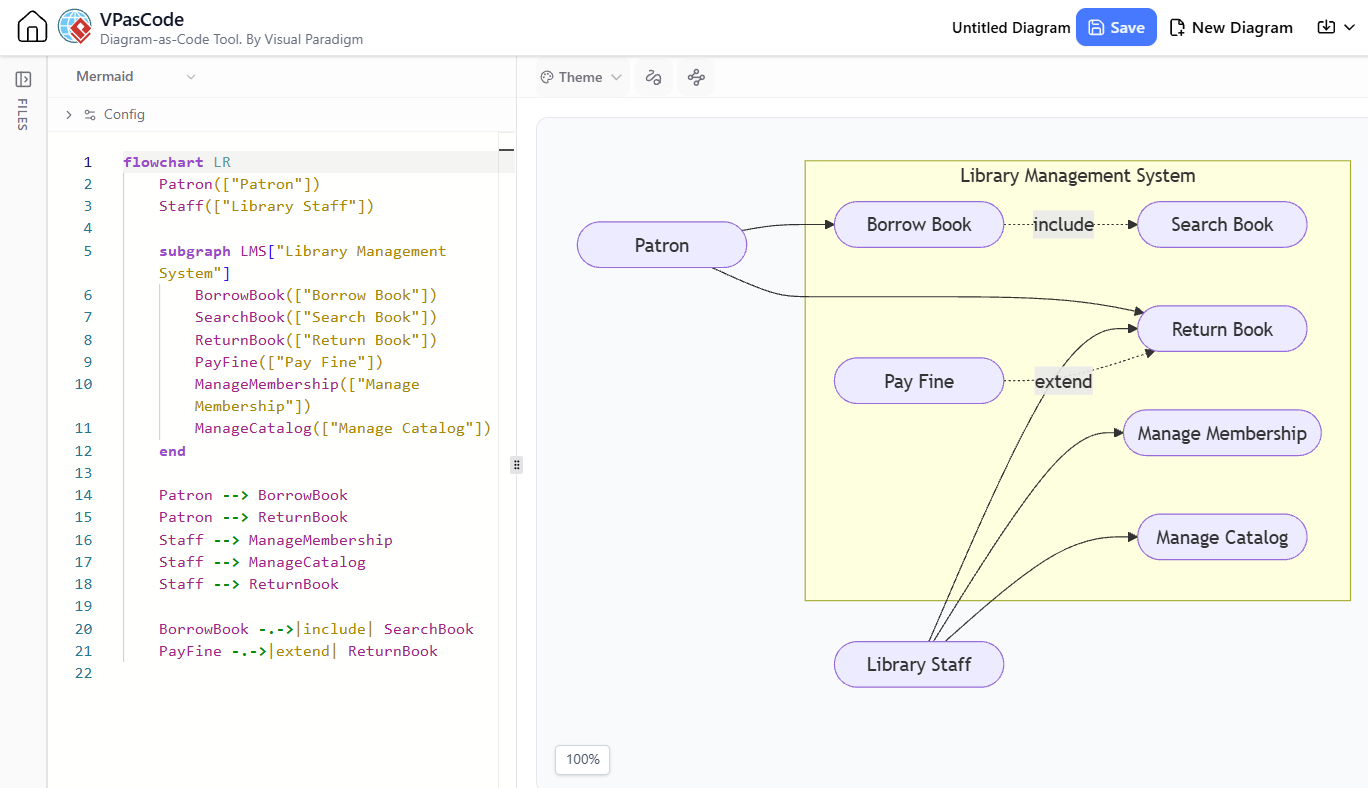
For teams practicing Diagram-as-Code, Visual Paradigm’s VPasCode editor includes native AI that generates PlantUML, Mermaid, and Graphviz directly from prompts. You can also use natural language to modify existing diagrams and receive side-by-side code diffs .
Example Diagram: Library Management System (Mermaid)
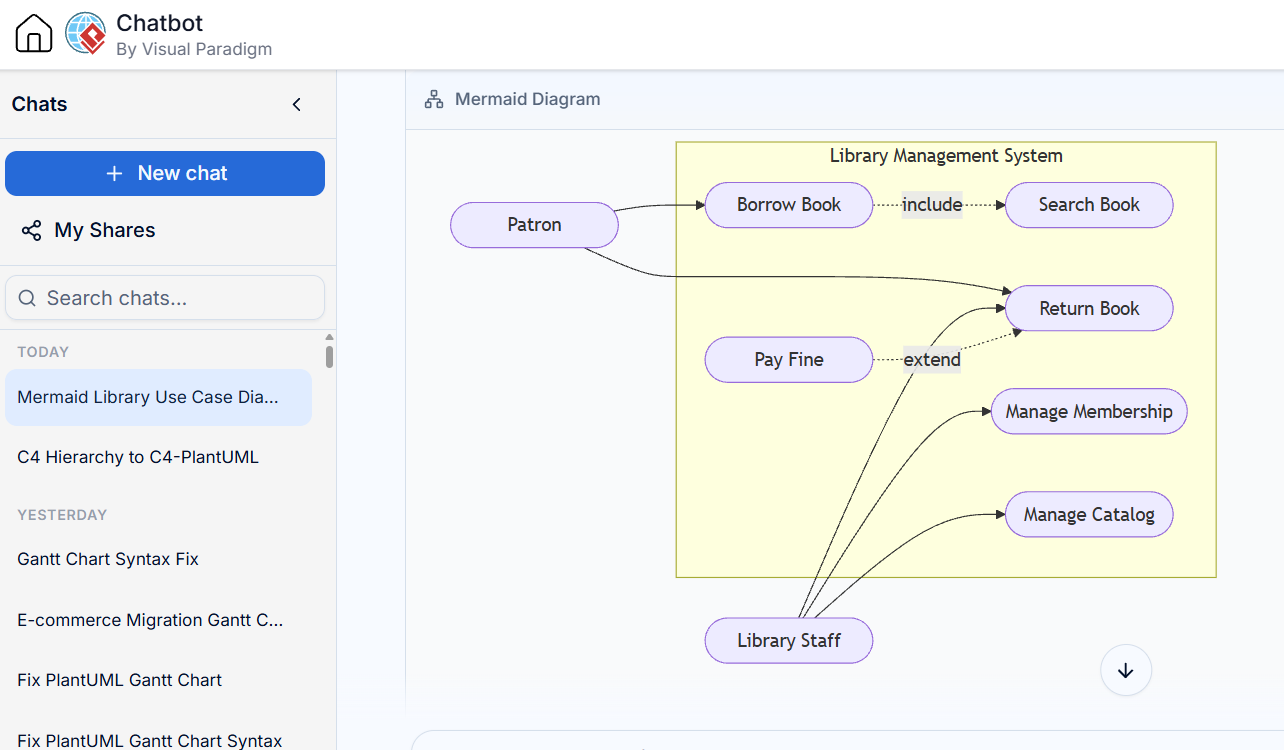
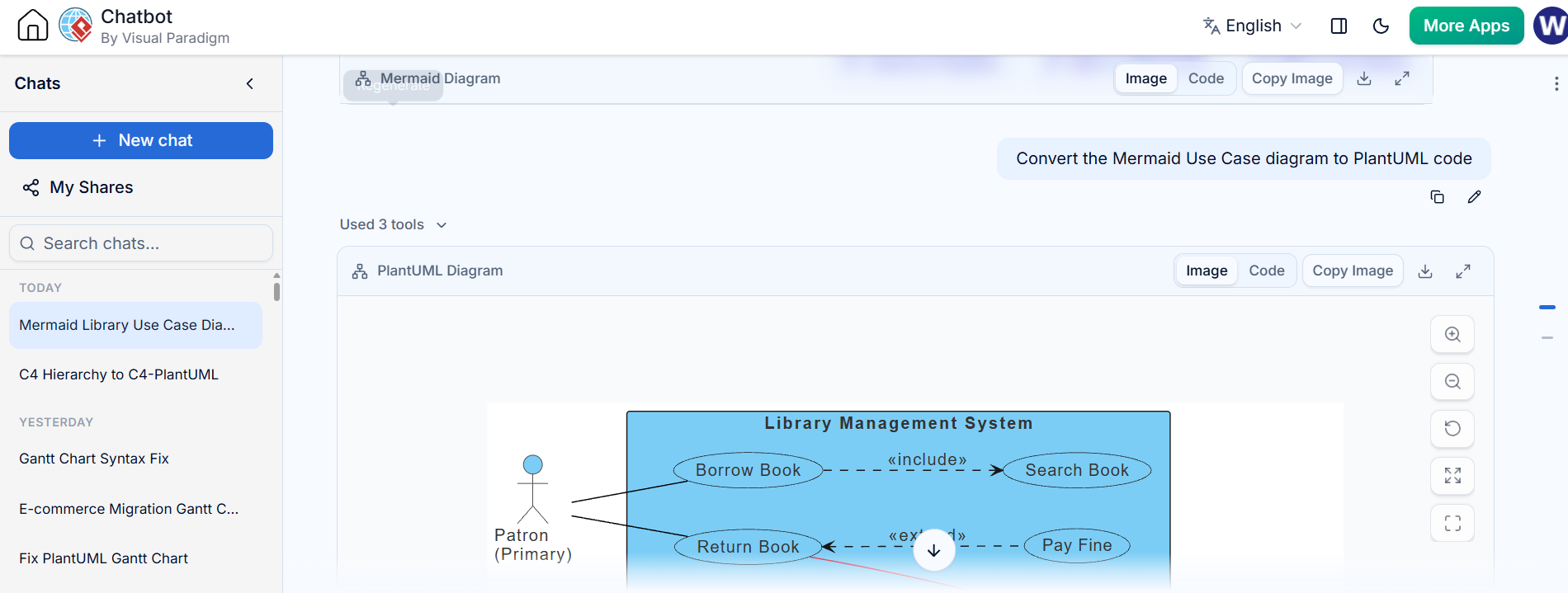
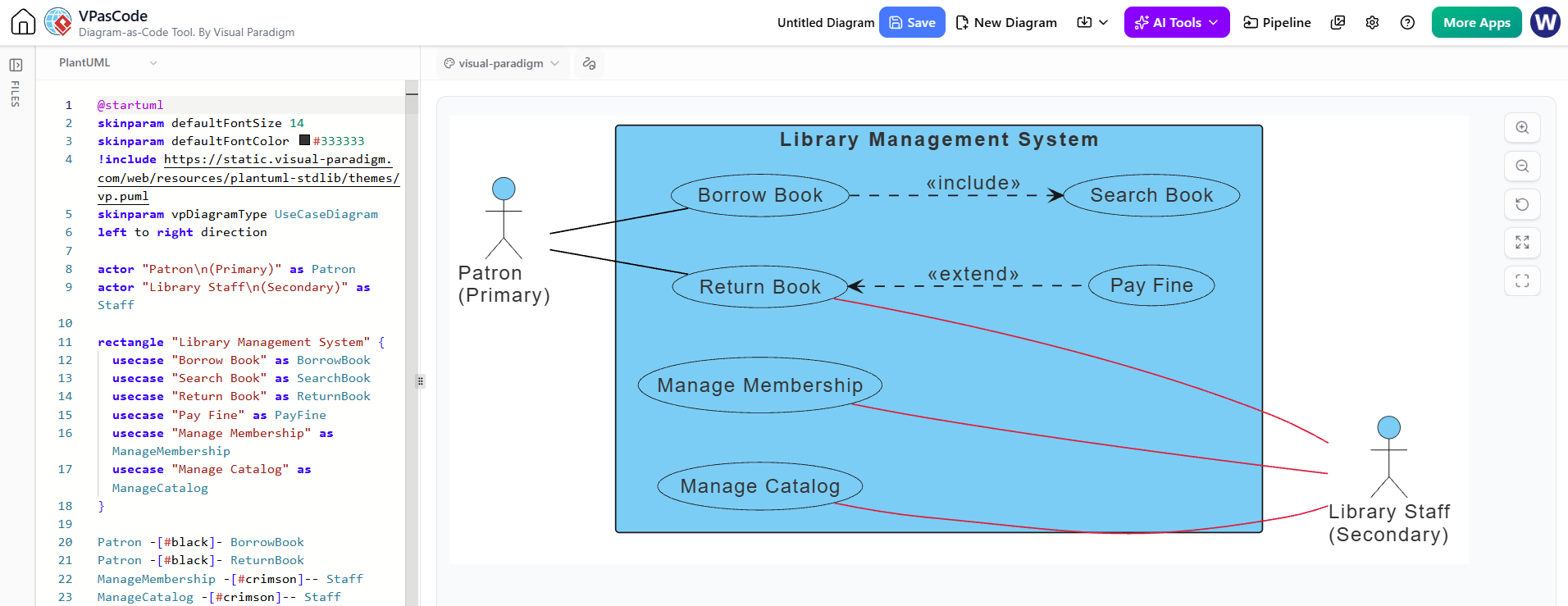
The following Mermaid code represents a use case diagram for a simplified Library Management System. It illustrates actors, system boundary, associations, and both «include» and «extend» relationships.
flowchart LR
    Patron(["Patron"])
    Staff(["Library Staff"])

    subgraph LMS["Library Management System"]
        BorrowBook(["Borrow Book"])
        SearchBook(["Search Book"])
        ReturnBook(["Return Book"])
        PayFine(["Pay Fine"])
        ManageMembership(["Manage Membership"])
        ManageCatalog(["Manage Catalog"])
    end

    Patron --> BorrowBook
    Patron --> ReturnBook
    Staff --> ManageMembership
    Staff --> ManageCatalog
    Staff --> ReturnBook

    BorrowBook -.->|include| SearchBook
    PayFine -.->|extend| ReturnBook
Diagram Notes:
-
Patron is the primary actor initiating borrowing and returning.
-
Library Staff is a secondary actor handling membership and catalog management.
-
Borrow Book includes Search Book because searching is a mandatory prerequisite in this simplified workflow .
-
Pay Fine extends Return Book because paying a fine is conditional—it only occurs when the return is late .